SCIENCE DIPLOMACY
Intro to Sciences diplomacy
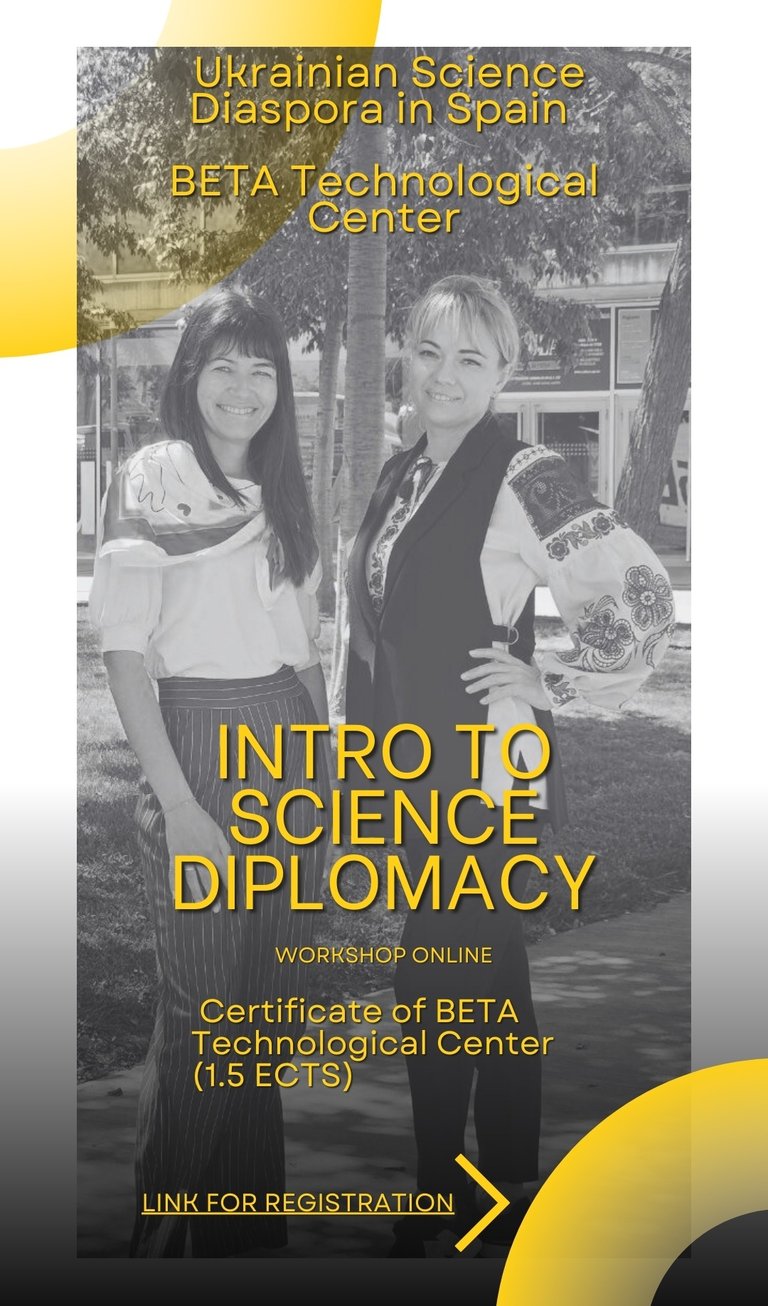
The online workshop “Intro to Science Diplomacy”, held on October 21–22, 2025, brought together Ukrainian and international experts to explore how science can serve as a bridge for diplomacy, post-war reconstruction, and European integration of Ukraine. The event was jointly organized by the Ukrainian Science Diaspora in Spain and the BETA Technological Centre (UVIC-UCC), with the support of Kyiv School of Economics (KSE), FECYT (Spanish Foundation for Science and Technology), ScienceForUkraine, RAICEX and the Science at Risk digital community.
The organizers:
Ukrainian Science Diaspora in Spain
BETA Technological Centre (UVIC-UCC)
Supported by
Spanish Foundation for Science and Technology (FECYT)
BETA Technological Centre (UVIC-UCC)
Ukrainian Science Diaspora
Universitat Politècnica de València
ScienceForUkraine
RAICEX (Network of associations of Spanish researchers and scientists abroad)
Kyiv School of Economics (KSE)
Science at Risk - digital platform and community of Ukrainian scientists
Day 1: Understanding and Practicing Science Diplomacy
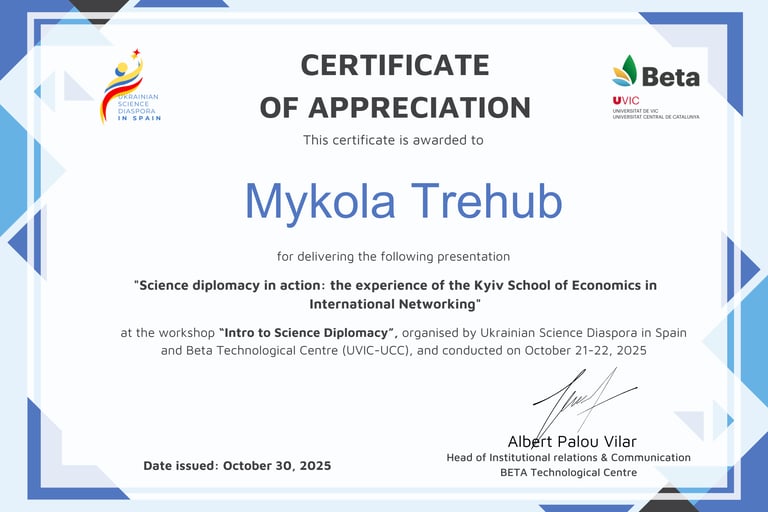
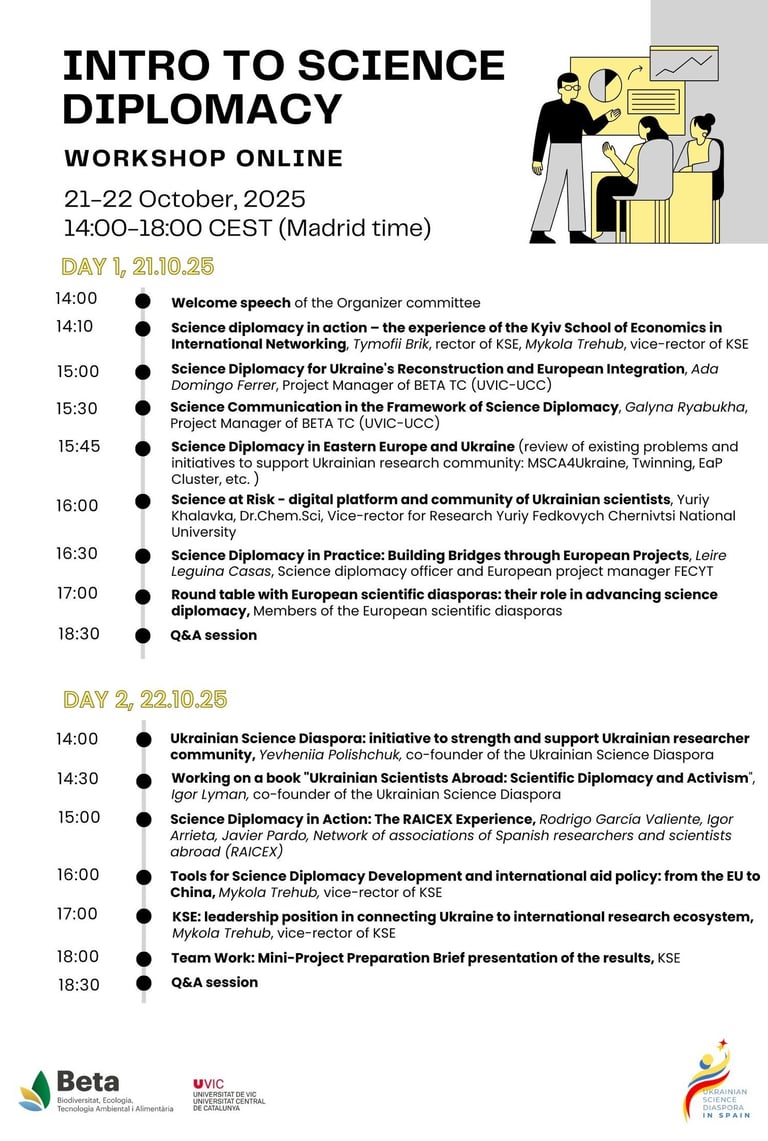
The first day opened with welcoming remarks by Hryhoriy Mozolevych, Director General for Science Development at the Ministry of Education and Science of Ukraine. Tymofii Brik and Mykola Trehub (Kyiv School of Economics) presented KSE’s international networking strategy and its role in building global partnerships in education and research. Ada Domingo Ferrer (BETA TC, UVIC-UCC) discussed science diplomacy as a mechanism for Ukraine’s reconstruction and European integration, while Galyna Ryabukha (BETA TC, UVIC-UCC) focused on science communication as a vital interface between researchers, policymakers, and society.
Yuriy Khalavka, Vice-Rector of Chernivtsi National University, introduced the Science at Risk platform — a digital community supporting displaced Ukrainian scientists.
Leire Leguina Casas (FECYT) presented practical examples of science diplomacy through European projects, highlighting initiatives that connect research, policy, and society across borders.
The day concluded with a round table of European scientific diasporas Niek Buurma (DNA-UK – Dutch Scientific Network in the UK), Catarina M. Liberato (PARSUK – Portuguese Association of Researchers and Students in the UK), Anna Sobocińska Polonium Foundation (Polish Scientific Diaspora), Rodrigo García (RAICEX – Spanish Researchers Abroad), which reflected on key questions:
In recent years, many researchers have seen their careers affected by wars and political changes. Do you think science diplomacy needs to change to respond to these new realities? And if so, what should be the main priorities?
Researcher diasporas often act as bridges between their home and host countries. In your view, what makes these connections successful?
What barriers (administrative, cultural, or political) do diaspora researchers face when trying to connect research communities?
What inspired you personally to get involved in supporting scientific diasporas? And what advice would you give to others who would like to follow a similar path?
🔹 Day 2: Building Networks and Tools for Global Engagement
The second day was opened by Pablo Gil, Honorary Consul of Ukraine in Valencia. Yevheniia Polishchuk and Igor Lyman, co-founders of the Ukrainian Science Diaspora, presented their ongoing work to strengthen Ukrainian scientific communities abroad, including the forthcoming book “Ukrainian Scientists Abroad: Scientific Diplomacy and Activism.” Representatives of RAICEX — president Rodrigo García Valiente, Igor Arrieta, and Javier Pardo — shared the Spanish experience of connecting scientific excellence with policy-making, offering concrete mechanisms for integrating researchers into European cooperation frameworks.
A special intervention from RAZOM for Ukraine - Alex Domaradsky and Stephanie Domaradsky highlighted the organization’s ongoing programs supporting academic mobility, humanitarian aid, and advocacy for Ukrainian science in the U.S., especially in the field of medicine and health. Further presentations by Kostyantyn Kyrychenko (KSE) focused on European university alliances and best practices of cooperation with Ukrainian higher education institutions, while Mykola Trehub (KSE) outlined a scientist’s roadmap to science diplomacy, emphasizing the tools and mindset required for sustainable development careers.
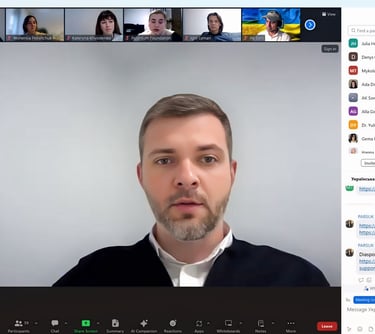
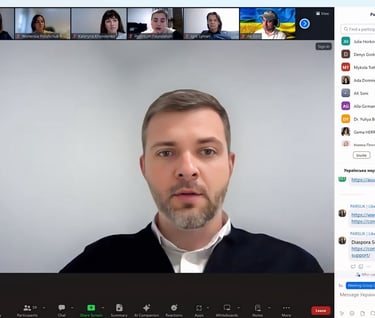
Mykola Tregub
Vice-Rector of the Kyiv School of Economics
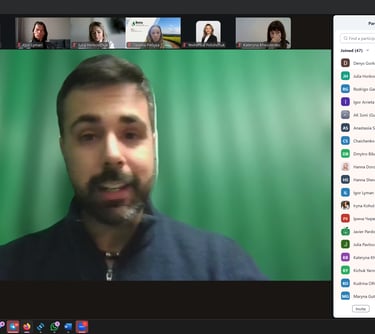
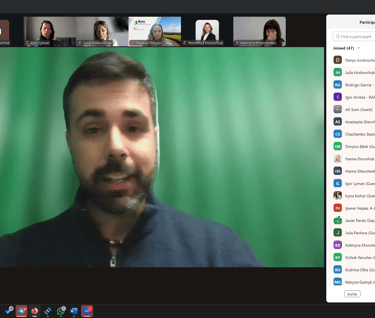
Rodrigo García Valiente
president of RAICEX
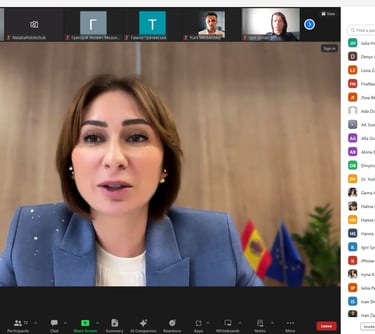
Lucia Zadorozhna
Representative of the Commissioner of the Parliament of Ukraine for Human Rights in the Kingdom of Spain
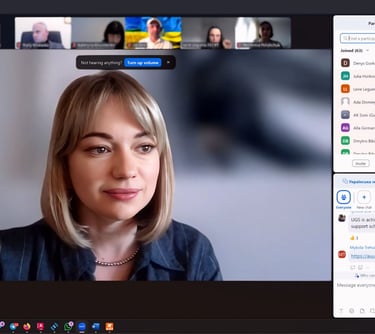
Julia Horkovchuk
Moderator
Outcomes. The workshop enhanced participants’ understanding of science diplomacy as both a policy instrument and a practical framework for rebuilding Ukraine through knowledge exchange, innovation, and evidence-based cooperation.
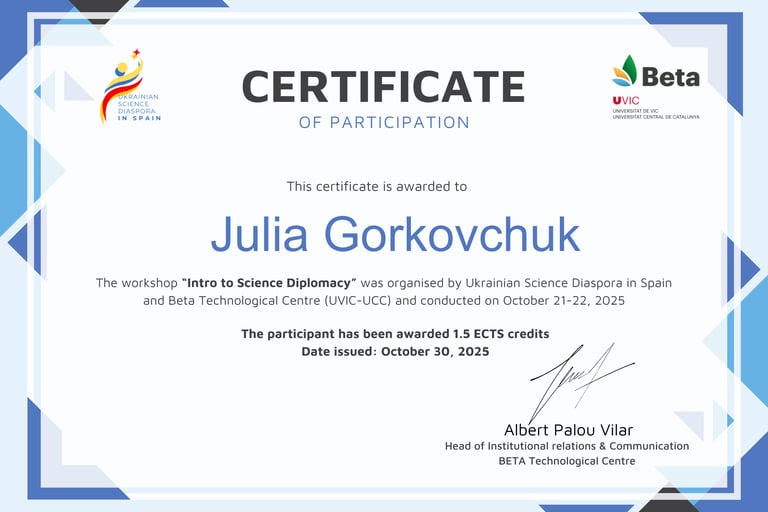
All participants received a Certificate of BETA Technological Centre (UVIC-UCC) (1.5 ECTS).